2027 Honda CBR1000RR-R Fireblade Unveiled: A Sharper, Lighter and More Track-Focused Superbike
Honda has unveiled a fully redesigned 2027 CBR1000RR-R Fireblade series, bringing revised chassis engineering, an updated 999cc inline-four engine, refined electronics and a dedicated HRC Works Edition for riders seeking a more focused track machine.
Honda’s Fireblade has always represented the company’s pursuit of high-performance road-going superbikes shaped by racing development. For 2027, Honda has taken a substantial development step with a fully redesigned CBR1000RR-R Fireblade family. The update is not limited to new graphics or cosmetic detailing: Honda says the work covers the chassis, engine, suspension, aerodynamic package and the use of sustainable materials.
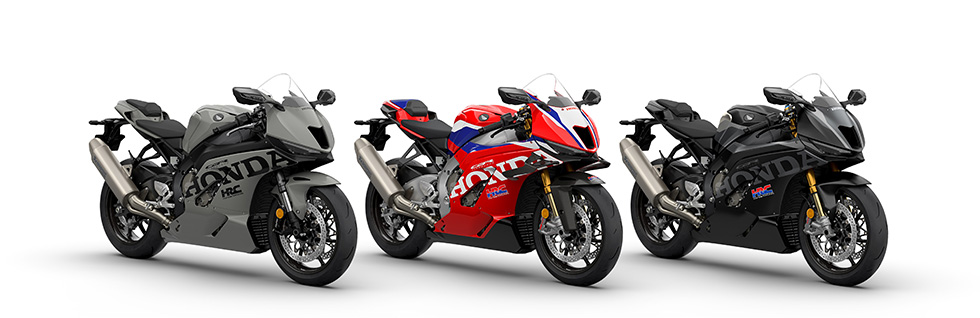
The 2027 range consists of three variants: the CBR1000RR-R Fireblade, CBR1000RR-R Fireblade SP and the newly introduced CBR1000RR-R Fireblade SP HRC Works Edition. The SP variant receives electronically controlled suspension and other premium equipment, while the HRC Works Edition adds a more competition-oriented specification.
Three Fireblade Versions for Different Levels of Performance Focus
Honda’s 2027 Fireblade family is arranged around three specifications. The standard Fireblade forms the core of the range, the Fireblade SP adds higher-specification suspension and equipment, and the SP HRC Works Edition is positioned as the most specialised model, incorporating components and development intended for circuit use.
The addition of the HRC Works Edition is particularly significant. Honda describes it as a homologation model for the FIM Superbike World Championship (WSBK), incorporating race-developed components and technologies. It is designed to be road-legal while meeting the regulations applicable to individual markets.
Redesigned Chassis: A New Approach to Rigidity and Stability
One of the most important changes for 2027 is the newly designed aluminium twin-tube frame. Honda says the frame has been developed to achieve an ideal balance of rigidity. The opening in the head pipe channels the frame to the rear, while changes to the engine hangers alter the way the engine contributes to overall chassis behaviour.
Honda states that the revised engine-hanger structure provides greater flexibility in frame design and contributes to a 20% reduction in torsional rigidity compared with the previous model. The objective is to improve cornering performance, tyre contact feel and stability under acceleration, braking and changes of direction.
The aluminium pressed-construction swingarm has also been redesigned. Honda has reduced the pivot-shaft diameter from 20mm to 17mm and adjusted wall thickness and pivot width to optimise rigidity. Honda says the revised design improves rear-tyre contact feel during cornering.
For a high-performance superbike, chassis behaviour is central to rider confidence. The value of these revisions will ultimately depend on how the motorcycle responds under braking, through fast direction changes and when accelerating out of corners. Honda’s engineering targets point towards improved feedback and balance rather than simply increasing stiffness.
Suspension and Braking: Premium Hardware Across the Range
Honda has optimised suspension damping settings for each variant to improve performance on the racetrack while enhancing the suspension’s ability to follow road surfaces during everyday riding.
- Fireblade: Showa suspension, including a Showa Big Piston Fork (BPF) at the front and a Showa rear shock.
- Fireblade SP: Electronically controlled Öhlins suspension, with NIX30 Smart-EC at the front and TTX36 Smart-EC at the rear.
The Fireblade SP’s electronic suspension package is intended to offer a broader range of adjustment and support the rider across different riding conditions. Braking hardware and suspension calibration remain key elements to assess when the motorcycle is evaluated in real-world and track environments.
999cc Inline-Four Engine: Revised for Stronger Performance Delivery
The 2027 CBR1000RR-R Fireblade continues with a 999cc liquid-cooled, four-stroke, DOHC, four-valve inline-four engine. Honda describes the engine as using a two-stage variable-length intake-funnel system.
The intake system uses a two-piece intake funnel structure that separates vertically according to engine speed. At lower engine speeds, the upper funnel slides upward and separates from the lower funnel. Honda says this arrangement improves power output in the low-to-mid engine range while maintaining high-rpm performance, contributing to a broader usable powerband.
Honda has also refined the two-motor throttle-by-wire system. The updated electronic control enables finer adjustment of throttle-valve opening, improving throttle response during acceleration and engine-braking performance during deceleration.
Another detail is the revised cylinder-head cover. Honda has changed the component from aluminium to magnesium, reducing weight by more than 200 grams on the Fireblade SP. Weight reduction in an engine component contributes to the overall mass target, although the complete motorcycle’s final weight figures should be considered when comparing variants.

HRC Works Edition: A More Competition-Oriented Fireblade
The headline addition to the 2027 range is the CBR1000RR-R Fireblade SP HRC Works Edition. Honda says this version has been developed to further enhance competitiveness in WSBK and is designed exclusively for solo riding. It incorporates numerous dedicated components.
Carbon-fibre-reinforced plastic (CFRP) front wings, front fender and rear-duct fairing are used to improve aerodynamic performance. Combined with their lightweight construction, Honda says these components contribute to improved acceleration and cornering performance.
The suspension package features mechanically adjustable Öhlins NIX30 front forks and TTX36 rear suspension, intended to deliver consistent damping performance and road-holding capability during racetrack riding. Braking is handled by Brembo Hypure Sport components.
Honda also lists HRC Racing Kit components for the Works Edition, including:
- PGM-FI and ignition unit.
- Bottom-neutral shift system.
- Head-pipe collar.
- Swingarm pivot collar.
- Other racing components.

Aerodynamics and the HRC Racing Connection
The HRC Works Edition’s carbon-fibre front wings and revised aerodynamic components underline the connection between Honda’s production superbike programme and its racing activities. On a litre-class superbike, aerodynamic components can influence stability and front-end behaviour at speed, while their design and integration must work with the chassis and rider position.
Honda’s announcement identifies the HRC Works Edition as a model developed with WSBK competitiveness in mind. This makes it the most track-focused member of the 2027 Fireblade family. Its solo-riding configuration and dedicated racing components also make clear that this is not simply a cosmetic special edition.
Sustainable Materials: Four Areas of Development
Honda says it aims to achieve 100% sustainable material usage by 2050 and is actively expanding the use of recycled and biomass-derived materials. The 2027 CBR1000RR-R Fireblade range incorporates four types of sustainable materials in selected components.
- Windscreen: Made from DURABIO, a plant-derived engineering plastic. Honda describes it as offering weather resistance, scratch resistance, durability and improved environmental performance.
- Front and rear seat bases: Made using pre-consumer recycled materials derived from manufacturing and moulding offcuts.
- Air cleaner case, side covers and other components: Made using post-consumer recycled materials derived from discarded plastic products previously used in household, commercial facilities and other applications.
- Honda Flagship WING emblem: Made using chemically recycled acrylic resin produced by breaking down used acrylic materials, including recovered materials from end-of-life vehicles.
It is notable that Honda is introducing material changes even in a high-performance flagship motorcycle. The use of recycled and biomass-derived materials shows how sustainability targets are beginning to influence component selection beyond commuter and mass-market models.
What the 2027 Fireblade Update Means for Superbike Riders
The 2027 Fireblade update appears to focus on a more complete performance package. The revised frame, swingarm and suspension aim to improve chassis response, while the intake system and throttle-by-wire refinements target a more usable spread of engine performance. The HRC Works Edition takes the concept further with dedicated aerodynamic and racing components.
For riders who use a superbike primarily on public roads, the standard Fireblade and SP specifications will be the most relevant versions to compare. Riders who regularly participate in track days or follow production-based racing will likely be more interested in the SP HRC Works Edition and its competition-focused hardware.
Our First Impression: More Than a Cosmetic Update
Honda’s 2027 CBR1000RR-R Fireblade series looks like a substantial engineering update rather than a simple model-year refresh. The most meaningful changes are the redesigned chassis, revised swingarm, updated intake system, refined throttle-by-wire control and the introduction of the HRC Works Edition.
The Fireblade SP’s electronically controlled Öhlins suspension and the Works Edition’s dedicated HRC equipment create clearer distinctions within the range. This gives buyers and track-focused riders different levels of specification to consider.
Our first impression is that Honda is sharpening the Fireblade’s performance identity through chassis development, engine response and racing-derived hardware. The HRC Works Edition is the most intriguing addition because it brings a more direct competition focus to the road-legal Fireblade family.
Final judgement on handling, comfort, braking feel and real-world performance will require independent riding impressions and instrumented testing. On the basis of Honda’s announcement, however, the 2027 Fireblade family represents a meaningful technical step forward for the litre-class superbike.
India Perspective: Will the 2027 Fireblade Come to India?
The Fireblade is a premium litre-class superbike and an aspirational model for Indian performance motorcycling enthusiasts. The 2027 updates will be of interest to riders who value track capability, advanced chassis hardware and Honda’s racing engineering.
Honda’s announcement does not by itself confirm Indian launch timing, variant availability or pricing. These details will depend on Honda Motorcycle & Scooter India’s market plans and any subsequent official announcement. Indian buyers should wait for confirmed local information before making purchase decisions.
Follow EICMA 2026 Coverage on Indian Bikers Magazine
Stay connected with Indian Bikers Magazine for more new motorcycle reveals, superbike updates, adventure motorcycles, technology stories and first-impression articles from EICMA 2026.
Send your suggestions to indianbikersmagazine@gmail.com.
Official Source and Further Reading
- Honda Global: Honda Unveils Fully Redesigned CBR1000RR-R Fireblade Supersport Model in World Premiere
- Honda Global: CBR1000RR-R Fireblade Technology
Specifications and equipment described above are based on Honda’s 2027 model announcement. Market availability and specifications may vary by country. Image credit: Honda.